about usprogramsreportsnewsletterorchard gardenslandlordsfrequently asked questionscontact

Reports

Landlord/Owner Information
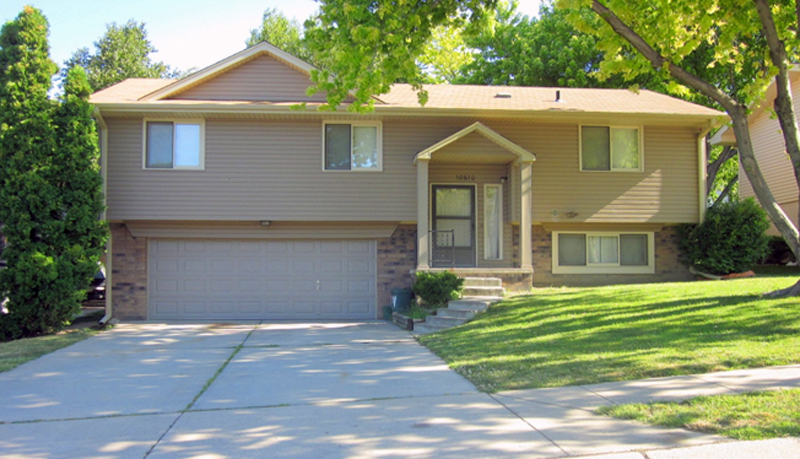
The Douglas County Housing Authority administers the Section 8 Housing Choice Voucher program within a specific jurisdiction in Douglas County (west of 72nd Street in Omaha to Valley, NE, south to Harrison Street and north to Blair High Road).  The Douglas County Housing Authority also administers the Section 8 vouchers for Blair, NE.  This program provides rent subsidies that make it possible for low-income households to rent units owned by private landlords in the community.

Total Contract Rent in the Section 8 Program
Under the Section 8 Housing Voucher program, the total contract rent paid to a landlord is negotiated between the landlord and the prospective tenant, governed by rent reasonableness.  The tenant pays a portion of the rent based on his/her income and the voucher covers the balance.  The tenant’ share of rent is an affordable percentage of his/her income, which is generally between 30 to 40 percent of the monthly-adjusted gross income.  Minimum rent is $50.00. 
 
Lease Terms
Typically, the initial Section 8 lease covers a term of 12 full months.

How to Participate

Which units are eligible for Section 8?
Any rental unit is eligible for leasing under Section 8 subsidy as long as it is properly zoned, rent-reasonable, and passes the Section 8 inspection based on HUD’s Housing Quality Standards (HQS).
 
How does Section 8 work?
Section 8 Participants with newly issued Vouchers enter the private rental market to seek housing from private landlords who have offered their property for rent.  Valid Vouchers are the holder’s official documentation that the tenant is eligible for Section 8 rental subsidy.
 
When a tenant locates a suitable rental unit and the landlord agrees to lease to the tenant, a Section 8 inspector must conduct an inspection of the rental unit.  After completion of a successful inspection and after the Housing Authority’s Section 8 Department has received the signed leases and contracts from the landlord, rental subsidy payments will begin.  Subsidy payments from the Housing Authority will follow on the first of each month.  Concurrently, participants must also pay their share of the rent on the first of the month as calculated by the Housing Authority.
 
Rental subsidies are subject to renewal effective upon each anniversary.  Adjustments in the terms may be negotiated, by the tenant and landlord, as a result of business and economic factors.  Rent shares may then be reapportioned, by the Housing Authority, as a result of changes in the tenant’s income and/or the amount of contract rent.  As part of the renewal process, the unit is reinspected and must pass inspection for the renewal of subsidy payments.
 
Effective July 1, 2009, all Housing Assistance Payments to landlords will be paid via direct deposit.

Tenant Screening
In accordance with the Housing Opportunity Extension Act of 1996, the Housing Authority completes a criminal background check on all Section 8 applicants.  Under certain circumstances, applicants who are found to have a drug-related criminal history or a violent criminal history background may be denied admission to the Section 8 program.  Registered sex offenders are denied Section 8 assistance.  The specific reasons for which applicants with criminal histories can be denied are limited, and the possession of a voucher should not be taken as a guarantee that the holder does not have a criminal history.  The Housing Authority uses the online Nebraska Judicial System to conduct in-state criminal background checks, and Tenant Data to conduct out-of state background searches.
 
Landlords must screen their own prospective tenants
Landlords are encouraged to use the same screening criteria they would use for unassisted clients, which may include rent and utility payment history, previous unit and premise upkeep, references, credit history and criminal records check. 
 
Tenant Responsibilities
The family is required to comply with the lease and program requirements, pay its share of rent on time, maintain the unit in good condition and notify the Housing Authority of any changes in income or family composition.  A family can move without jeopardizing its participation in the program as long as it notifies the Housing Authority ahead of time, terminates the existing lease within the lease provisions and finds acceptable alternate housing.
 
If lease violations warrant eviction, the landlord should keep the Housing Authority informed by sending a copy of all legal notices to the Housing Authority.  Landlords should proceed with eviction as you would with any other tenant, according to the Nebraska Landlord Tenant Act.
 
 
Locating a tenant
Landlords who desire to list their rentals with the Housing Authority Office may call 402.444.6203 x 10 or email douglascountyhousing.com.  Landlords are encouraged to list their properties on the website www.housing.ne.gov.

Housing Quality Standards

What are Housing Quality Standards?
All rental units subsidized under the Section 8 program must be inspected and meet Housing Quality Standards (HQS).  HQS is a comprehensive program established by HUD to ensure that the housing it subsidizes remains decent, safe and sanitary. 

Following is an Inspection Checklist of the items the inspector will review:

Smoke detectors must be operational in the unit and common areas in hallways and basements

  • Windows must be fully operational.  Broken and cracked glass must be replaced.

  • Handrails are required in the interior and exterior of a building where there are more than 4 steps

  • All plumbing must be in good working condition and free of leaks

  • Bathroom must have an exterior window OR a working venting fan

  • Stove must work properly and be clean

  • Keyed locks on interior doors are NOT allowed

  • Peeling or chipping paint must be scraped and repainted. 

  • Doors and windows must be weather tight

  • Missing or loose electrical plates and switch plates must be tightened or replaced

  • Excessive garbage in the apartment, hallway, or on the property is not allowed

  • All hallways are fire exits and must be kept free of debris, such as bikes or trash

  • All flooring must be free of tripping hazards

  • All kitchen and bathroom floors must be water tight, free of defects and easily cleanable

  • Tub and shower walls must be waterproof with no loose or missing tiles and must be free of mold or mildew

  • All trash is required to be stored in proper containers with lids

  • All utilities, gas or electric, whether landlord or tenant supplied, are required to be maintained at all times

  • Heat is required to be operational between September 15 and June 15

  • Common areas such as the basement, exterior and hallways are inspected

It is generally expected that the owner or landlord will keep the property well maintained not only for the comfort of their tenants, but also to preserve the value of the property.  If the living unit is determined not to be decent, safe, and sanitary as a result of the neglect of the owner/landlord, the Housing Authority has the option to either abate the Housing Authority’s portion of the rent until the unit meets HQS, or terminate the HAP contract so that the tenant can locate other housing.
 
If the Housing Authority discovers that a tenant who is responsible for the utility payment does not have active utility services such as electricity, water or gas, the tenant is then considered to be in violation of HQS, and both the tenant and owner/landlord will be notified that the tenant will be terminated from the Section 8 program if utilities are not reconnected within seven (7) days.

Frequently Asked Questions

What if the tenant wants a pet?
The pet arrangement is between the tenant and the owner.  DCHA is not involved in the arrangement.
 
Can an owner collect a security deposit?
Yes.  An owner may collect up to one month’s rent for deposit in the voucher program.  The tenant must pay this deposit.
 
When can rent be increased?
After the first year of the lease, the owner is required to give both the Housing Authority and the tenant a 60 day notice for a rent increase.  The rent must be determined reasonable before being approved.
 
Can additional members be added to the household and lease?
Yes, with written approval from the owner and the Housing Authority.  Landlords have the right to screen additional adults the same way original tenants were screened.
 
What can an owner/landlord do about problem tenants?
Owners should maintain a consistent policy when handling problems/disputes with tenants.  DCHA recommends that owners/landlords send written warnings and confirmation letters to tenants and keep copies for their files.  Copies should also be forwarded to the Housing Authority.

When a Tenant Moves In

The Top Ten things every landlord should know:

Like almost everything else in the Section 8 program, the move-in process requires landlords, tenants and the Housing Authority to work together closely.  For that reason, the Housing Authority has compiled a list of the top 10 things every provider should know about the move-in process.  We hope this list will help make your next move-in fast, efficient and problem free!
 
1. Vouchers must be issued
Participants must be issued vouchers each time they move.  Participants are not eligible for an initial inspection unless the Housing Authority has issued a voucher, and the move-in process cannot proceed without an inspection.  Landlords may contact the Housing Authority to determine if a tenant’s voucher has been issued.
 
2. Request for Tenancy Approvals must be submitted
Before the Housing Authority can perform an initial inspection, the tenant will provide the landlord with a Request for Tenancy Approval.  This form must be filled out completely, because missing information will slow the process.  After you send us the Request for Tenancy Approval, we check the rent and utilities for affordability.  When the voucher is issued to the family, they are provided with an affordable rental rate range, based on their income.  We strongly recommend that you talk to participants ahead of time to find out what they can afford.  If a family’s share of gross rent (contract rent + utility allowance) exceeds 40 percent of the family’s income, then the family won’t qualify for the unit.
 
3. Units must be prepared for inspection
To ensure a speedy inspection process, units must be ready for inspection at the scheduled time.  Construction or rehabilitation work must be complete.  Also, the unit must be unoccupied (unless it is occupied by the tenant for whom the inspection was scheduled).  If a unit is not ready for inspection at the scheduled time, the Housing Authority inspector will not inspect the unit which will delay the process.
 
4. Tenants should not move in before inspection
Participants are encouraged not to move into a rental unit before it passes inspection because the Department of Housing and Urban Development (HUD) does not allow Section 8 subsidy to start until after a unit has been inspected and shown to meet HUD’s Housing Quality Standards.  That means that participants who move in prior to the unit passing inspection are responsible for the total amount of contract rent.  This can result in financial hardship for the participant and inconvenience for the landlord.
 
5. Rents must be affordable and reasonable
Participants may ask a landlord to reduce rent if their share of rent and utilities exceeds 40 percent of their income.  Please note that the landlord is under no obligation to lower the rent, but the Housing Authority will be unable to provide a subsidy if the rent exceeds 40% of the tenant’s income and/or the rent does not meet rent reasonable criteria.
 
6. You must sign a lease and a contract
Once a unit has passed inspection, the Housing Authority prepares contracts and sends them to the landlord.  Before providers can receive their monthly Housing Assistance Payments, the Housing Authority must receive a copy of the signed contract (between the landlord and the Housing Authority) and a copy of the lease (between the landlord and the tenant).  The lease must include the lease term, a list of all family members who plan to occupy the unit, the unit’s address and who pays for the unit’s utilities.

7. Owners and participants cannot be related
Please note that landlords and participants in the Section 8 program cannot be related. 
 
8. Side payments are not allowed
Landlords must never collect side payments from the participants.  Asking for or accepting a side payment is considered fraud and could make the landlord and/or tenant ineligible to participate with the Section 8 program.
 
9. The Housing Authority does not reimburse for deposits or unit damage
The Housing Authority does not have funds available to help tenants with deposits.  Participants are responsible for all deposits.  Landlords should collect deposits at the time of move-in, and make sure the lease describes payment plans in detail.  The Housing Authority also does not reimburse landlords for unit damage.  It is the provider’s responsibility to request payment for unit damage from the tenant.
 
10. When to contact the Housing Authority
A Douglas County staff person is always available to answer your questions.  Do not hesitate to contact us.


BACK TO TOP>>

All content ©2003 Douglas County Housing Authority and its licensors. All rights reserved.